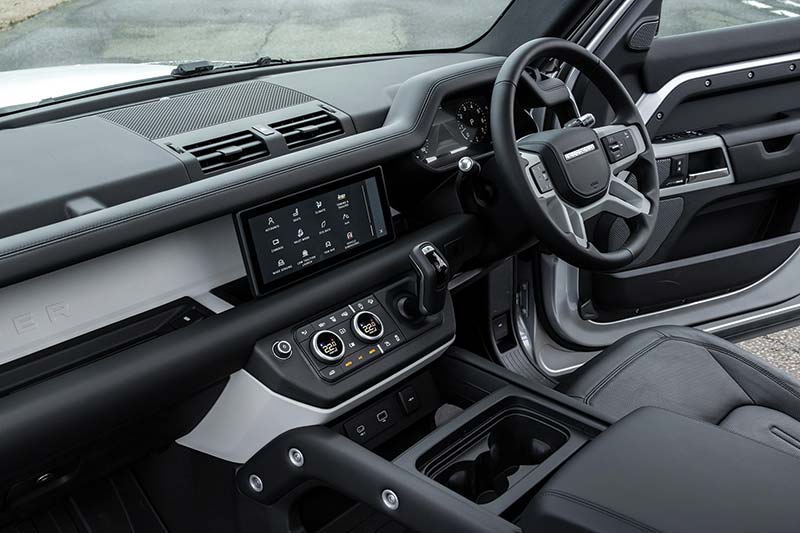
 Long before it was revealed in 2019, the idea of a “new” Defender was making waves among Land Rover die-hards. How could Jaguar Land Rover replace such an iconic vehicle with anything but a continuation of the classic design – one that hadn’t been radically altered, and only went through a handful of engine and trim updates, during its 68-year history? And what if they softened it so much that it simply didn’t deserve to wear the nameplate?
The original Land Rover stood frozen in time for decades, despite the pressure of an ever-evolving automotive industry. It was only in the 1980s that it gained standard features like disc brakes, power steering, and roll-down windows. In fact, Land Rover didn’t even add a second vehicle to the marque until the debut of the Discovery in 1989.
The Discovery is widely credited with having saved Land Rover from the turmoil of the British auto industry in the 1980s, giving the company a solid foundation in North America, where it hadn’t sold vehicles for quite some time. But the Discovery wasn’t far off from its Defender relative, having been gifted the same drivetrain shared by the 90 and 110 models. This was a clever cost-cutting measure as the new vehicles would essentially be different only in frame and body and meant that the Discovery could claim to be just as versatile, despite its decidedly roomy and comfortable interior.
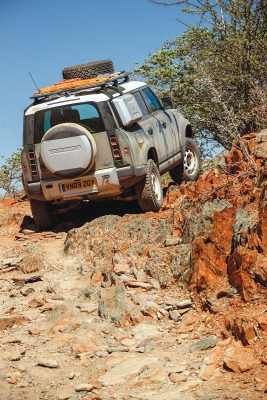 But as the decades wore on, the Defender slowly ran afoul of safety and emissions regulations, and those creature comforts first allowed in the Discovery eventually made their way to the Defender. A few updates saved it from the chopping block until 2016, when the final vehicle rolled off the assembly line and in to its place in history. Many enthusiasts knew that Land Rover was working on a replacement, and many assumed it would continue the legacy of a body-on-frame solid-axle vehicle. Sadly, this was not to be, and when it was learned that the most recent Discovery would (ironically) lend its platform to the New Defender, comment-thread-battles began all over the internet.
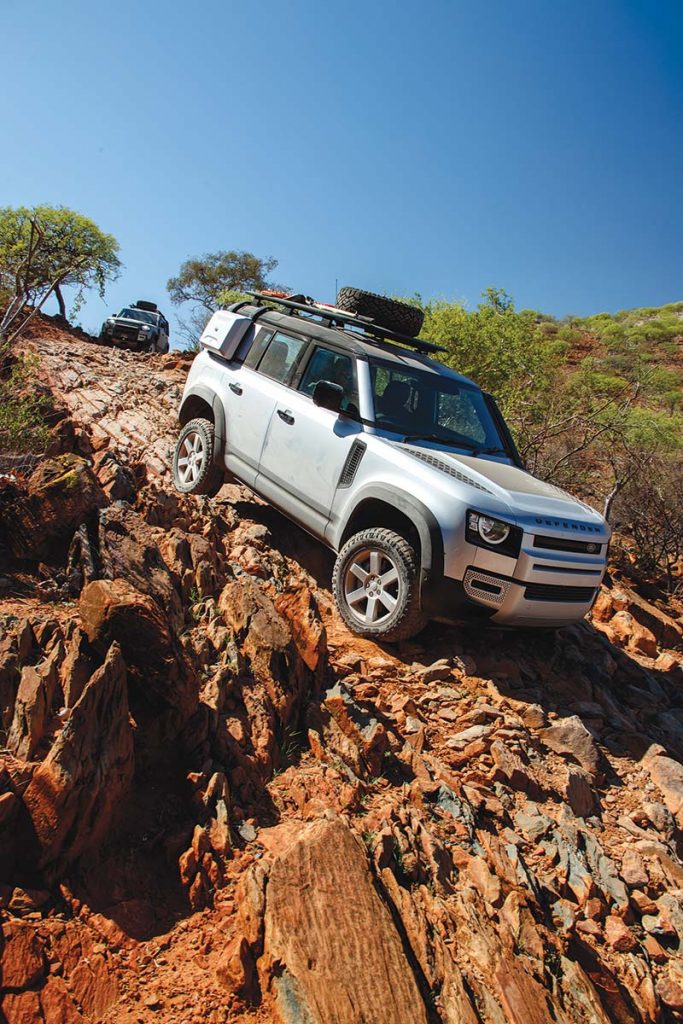
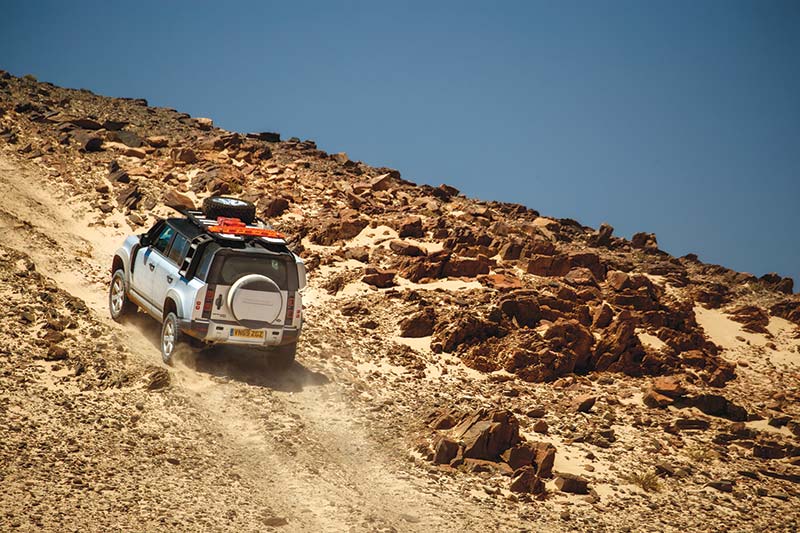
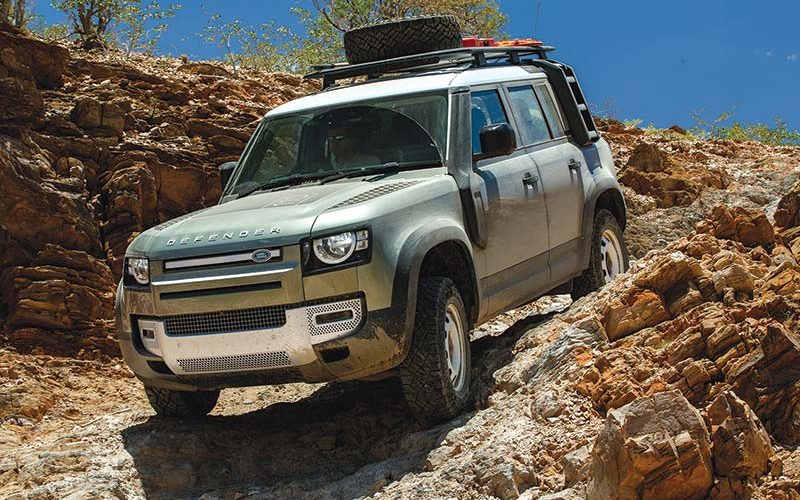
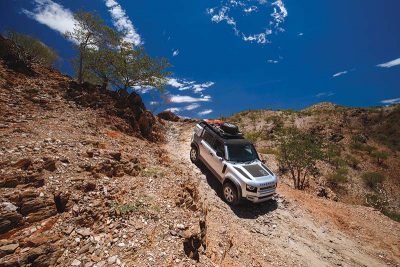
All debates aside – the dust has settled, and the 2020 Defender has proven to be a serious off-roader – even unexpectedly excelling in categories like towing. During development, the new Defender was given serious performance challenges, including how it would handle being repeatedly driven in to an 8-inch ledge at 40km/h. Add this to claims of the unibody being three times stronger than a body-on-frame, and you start to see that JLR isn’t just paying lip service to off-road capability.
 With performance that matches or beats a Wrangler Unlimited Rubicon, the Defender 110 is no slouch in rough terrain – and just might have a few tricks going for it. Land Rover has spent the last 20 years developing high-performance computerized off-road systems. With fully independent air suspension, dynamically locking differentials, and wheel speed control via ABS, the Defender is decidedly well equipped for even the most serious trails.
If none of that matters to you, then you’ll like the hard figures. The Defender 110 outperforms a Rubicon in both water fording ability (35.5 vs 30 inches) and overall ground clearance (11.5 vs 10.9 inches) and even sports a water level indicator should you decide to get close to its maximum depth. While you might find better wheel travel and crawl ratios in a Rubicon, it’s difficult to argue with the comfort and quietness of the Defender’s unibody design.
Most of us with 4×4 vehicles spend an overwhelming majority of our miles on pavement, especially if our 4×4 is also a daily driver – and this is probably the case for Jeep and Land Rover owners alike. With this in mind, and with a more discerning type of 4×4 purchaser emerging in the market, the new Defender is a looming threat to Jeep’s most expensive trim levels.
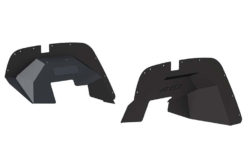
While you can spec it to over $100,000, it’s still quite capable when optioned a little under $70,000. The powerful 4-cylinder base engine may not offer much grunt, but it’ll still get you where you need to go – and for those pavement miles, will save you a few stops at the gas station. Essential options for any Defender build would include wheel arch protection and the Off Road package, which adds an electronic locking differential and off-road tires. If you’re towing, then the inline-6-cylinder is a must-have, with nearly 400 hp and 400 lb-ft of torque to unleash on and off the trails. An ideal configuration for dual-purpose urban and off-road use might be the upcoming 90 model, which sports seating for up to six people, offers the same performance as its larger brother, and costs $5,000 less.
 Any comparison to the Wrangler should not ignore the vast aftermarket support that exists for the Jeep brand’s top seller. In fact, that’s a very good reason to buy a Jeep, if you’re the type of person who likes to infinitely customize your vehicle. While the Defender does have over 100 dealer-supplied original accessories (including a few overland goodies), you’ll always get better value from aftermarket brands. Luckily for prospective Defender buyers, this is happening. Skid plates, rock sliders and roof racks are already available. Much needs to be figured out with the Defender’s complex front and rear bumpers, but we’d expect aftermarket solutions will appear before too long, allowing a more protected off-road experience along with the usual lights and winches that adorn most off-road rigs.
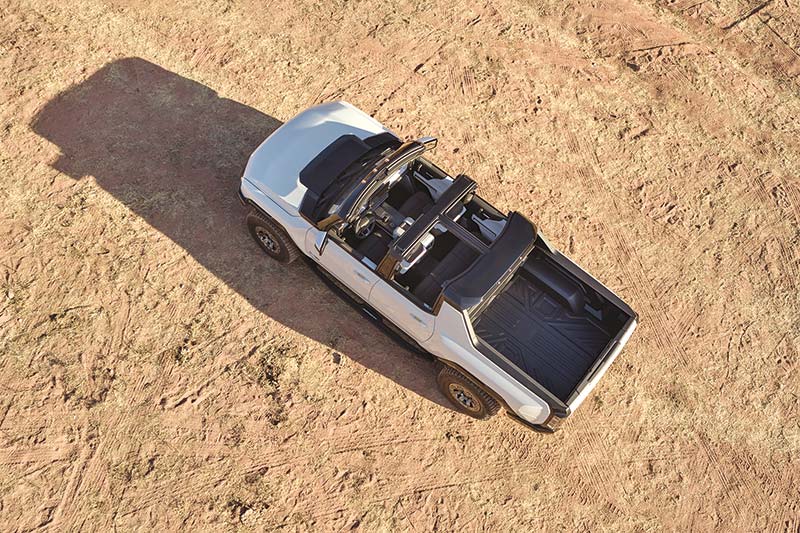
 There’s no doubt that electric 4x4s are coming, and the Defender will be no exception. It’s been stated by JLR that the Defender can easily be fully electrified in the near future, with a stepping-stone plug-in hybrid already in the works for next year. If this is truly the future of automotive technology, the Defender just found itself another advantage over the venerable Jeep Wrangler. Add to this JLR’s experience with terrain management computers, and you start to imagine that independently-driven electric wheels could finally make the solid axle obsolete. For now, though, the newest Defender is a present-day achievement for a company that could have lost its way in making practical, capable off-road vehicles. In 1948, practicality meant abandoning comfort for capability – today it means the opposite.
The new Defender seems to allow room for both, while still honouring the heritage that the Land Rover brand owes its existence to.
Shortly after the original Defender ceased production, British billionaire Jim Ratcliffe attempted to purchase the tooling, design, and entire assembly line from Jaguar Land Rover – who politely declined the offer. However, this didn’t stop Ratcliffe from realizing his dream. Earlier this year the INEOS Grenadier made its debut, with production to start some time in 2021. It sports solid axles, a Defender-like design (which even earned a now-defeated lawsuit from JLR) and a proven BMW inline-6 engine. Is this what the new Defender could have been? The Grenadier may be available in Canada as early as 2022, with a price point somewhere between $55-70,000.