Classic Cruiser: 1965 Mercury Colony Park Station Wagon

 Story and photos by Russell Purcell
The automobile plays an important role in North American culture and with each generation comes a model that represents a distinct period in the evolution of personal transportation. For my generation that vehicle was the station wagon, an automobile that was designed to combine the comfort of a traditional family sedan with the utility of a cargo van.
The Ford Motor Company’s Mercury division produced the Colony Park full-size station wagon between 1957 and 1991. This well-equipped family cruiser was the top-of-the-line variant of the popular nine-passenger Commuter model.
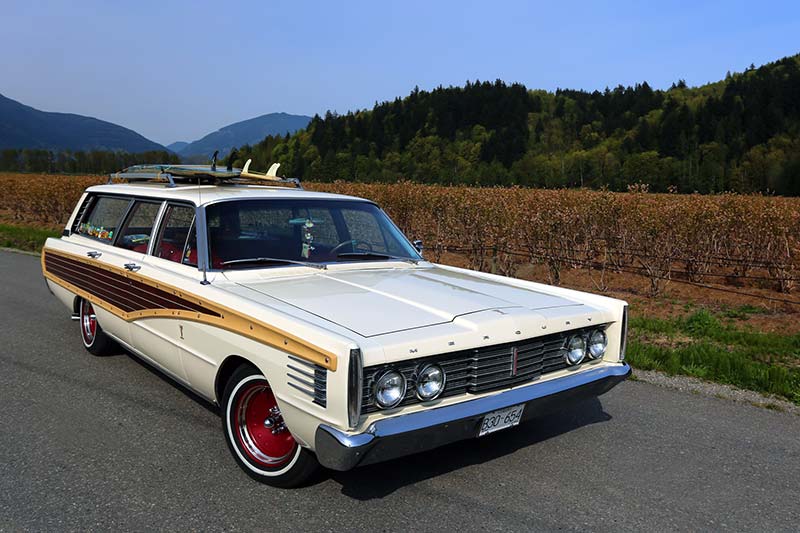
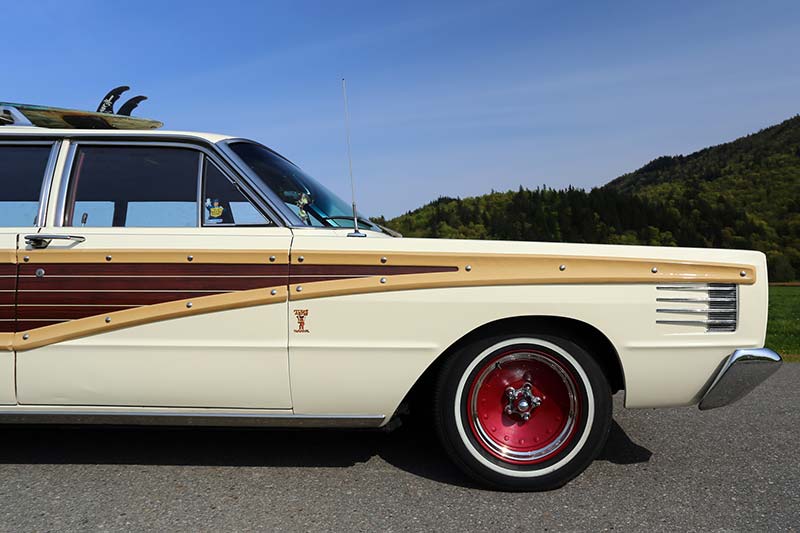
In 1965, Mercury debuted the fourth generation of the Commuter model and the Colony Park upgrade added niceties such as wood grain paneling, chrome trim on the pillars (inside and out), and upgraded upholstery. Beneath the enormous steel hood resides a 390-cubic inch V8 engine producing 270 horsepower and 378 pound-feet of torque.
Our example belongs to long-time hot rod enthusiast and businessman Henry Lehmann. Lehmann imports eye-glass frames for a living, and as such, is a man who recognizes design. The Mission, B.C. resident had just sold a classic Ford Ranchero and was seeking another project car to fill the hole in his small, but eclectic collection of automobiles, when he stumbled upon the Mercury Colony Park.
 “This car came from San Diego,” recalled Lehmann as he reflected on its history. “It didn’t look very good at first glance, as it had been sitting outside and was bleached by the harsh California sun. I saw it as a diamond in the rough that just needed to be polished up.”
“The people that had it had owned it from new, when they were approached by a young lad who wanted to purchase it to use to transport antiques for his business. However, he soon found the need for a larger vehicle, so he sold it to me.”
The enormous white wagon was straight and relatively clean, so once Lehmann got his hands on the car, he began a careful restoration process that would ensure that the car would remain faithful to how it rolled off the showroom floor half a century ago.
“It is a neat car,” proclaimed Lehmann, as he explained his love for vehicles from this period. “I have owned hot rods all my life, but this car is one of the few that when you take it for a drive, people seem to really interact with it. It elicits lots of thumbs up and an equal number of waves. I think there are a lot of people out there who grew up in a station wagon, and this car triggers those memories.”
Lehmann’s car has all-new carpets, refinished wood trim, and new vinyl siding. It has been painted once, to a driver quality, as Henry wanted to drive and enjoy it. “The car is mostly original, including all the glass, trim, door panels and gauges. The seats are as well, although I did reupholster the driver’s seat as it was really worn.” To reflect his love for the hot rod culture, Lehmann added a set of vintage Keystone wheels painted a deep red.
 There have been no modifications made to the engine, and like a proud father, Henry was quick to offer that it has proven to be both strong and reliable. He did, however, add air shocks to the rear of the vehicle as these were a popular accessory back in the day and allowed you to beef up the rear when you had a heavier load of cargo or passengers.
“Obviously, when you purchase an old car, it is important to make sure it is safe to operate, but you also need to know when to stop, as it is a slippery slope and pretty soon you’re into a project for huge sums of money when the car is really only worth $3,000.”
Lehmann sees this car as a time capsule and he is happy that he managed to find one that was worth preserving, as there aren’t many Mercury wagons around. Chevrolet seemed to dominate the market during that period.
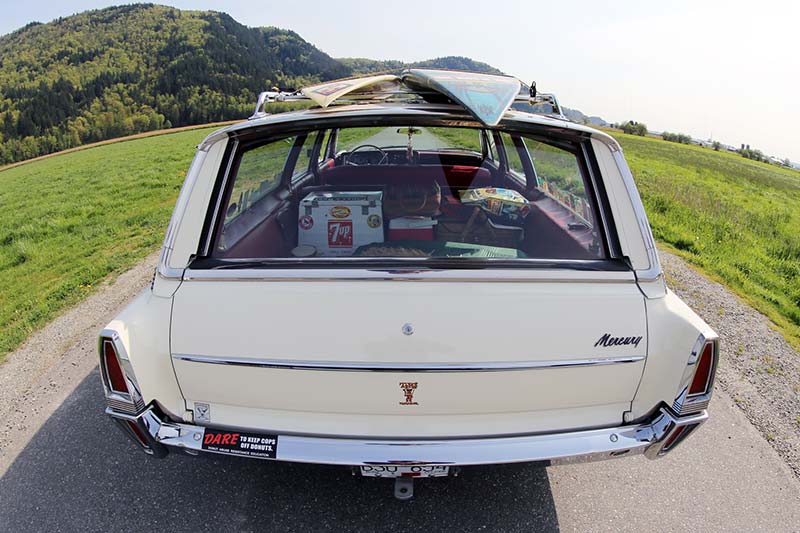
“There are so few of these around now, as they were the workhorse of the family unit and as such, were driven hard and eventually, into the ground. They were perfect for taking the family on long road trips or for a weekend camping adventure.” To reflect this trait, which is rather unique to the station wagon, Lehmann sourced a selection of vintage and reproduction travel decals to affix to the rear side windows.
“This car has power windows and a tilt wheel which were unusual for a car at this time. Back then people weren’t in love with all the options like they are now, and dealers didn’t stock loaded cars on the lot like they do today.”
 There is growing interest in old station wagons and pickup trucks at the moment and original examples like this one are getting hard to find. “Wagons are kind of hot right now, but there are also still a lot of people that wouldn’t give you five cents for one. That is what I like about the car hobby. It’s pretty much anything goes. Whatever turns your crank, just enjoy it. I don’t criticize anybody. If you want to have a Pacer, have a Pacer!”
With a hand in the fashion industry, the affable enthusiast appreciates style and design, and feels that these cars deserve to remain faithful to what they were, as this is what makes survivor cars so charming.
“I find that a lot of people pick a theme for their projects, especially with station wagons, but get lost in the process and lose their focus. The car ends up as a mere assembly of parts rather than actually representing anything.”
“I have always tried not to go too far, but I like the look and feel of the old woodies that emerged with the surf culture in California, so went in that direction with this car. I am all about driving my cars, rather than trying to achieve a look, so any modifications have to be practical.”
Henry still drives his wagon on a regular basis, but as it is over half-a-century old, he feels this classic example of a cultural icon deserves to be in retirement mode and just go out on nice days.
“Nowadays, everything is designed and manufactured with planned obsolescence so that companies can generate future sales in short order,” suggested Lehmann with a look of disappointment on his face. “Luckily for us, cars like this Mercury were built to last, and I appreciate that.”